Revival Review

Hand-knotted and hand-loomed wool at prices well below traditional wool retail.

PRPriya RamanMaterials EditorUpdated September 19, 2026Methodology
Revival Revival Hand-Knotted Wool Rug

Overall assessment

Revival Hand-Knotted Wool Rug

Revival takes our Best Wool award and it is the rug we point to when the purchase needs to outlast the room it is bought for. Wool does things no synthetic and no cotton can: the crimped fiber springs back from crushing, the natural lanolin makes it resist soil and shrug off water long enough to blot, it is naturally flame-resistant, and a hand-knotted wool rug is one of the very few furnishings that can be handed down. What you give up is washability — this rug will never go in a machine, and that is not a flaw in the rug but a boundary on where it belongs. Put it in a living room, a dining room or a primary bedroom. For a nursery in a spill-heavy year, buy washable cotton and buy this later.

Why we picked it

It is our Best Wool pick because it delivers the fiber and the construction that make wool worth buying — a dense, resilient wool pile on hand-knotted and hand-loomed builds — at prices that sit far below traditional wool retail. Wool is still the best-performing rug fiber ever made for longevity, soil resistance and underfoot feel, and Revival is the most accessible honest route into it.

What we don't like

Early shedding is real, and professional cleaning adds to lifetime cost.

Rug Ratings Scorecard

Revival

7.6/10

Materials & Transparency
9.0
Washability
2.0
Cleaning Performance
6.0
Durability
10.0
Comfort
9.0
Construction Quality
10.0
Design
9.0
Value
8.0
Ease of Maintenance
6.0
Certifications / Testing
7.0
Evaluated through research: published specifications, material disclosures, manufacturer documentation and owner reporting. Not physically tested.

Our awards

Why Revival wins its category

Each award below is scored against a specific set of criteria in our testing methodology. Here is exactly what earned it.

Best Wool

Why it is our Best Wool pick

Best Wool is judged on fiber quality, construction, longevity, hand and what you pay to get all four. Revival leads on each. The pile is wool on a cotton foundation, and the construction is genuinely hand-knotted or hand-loomed rather than tufted and glued — the distinction that separates a rug you keep from a rug you replace, because a knotted rug has no adhesive layer to delaminate and no backing to fail. Wool's structural advantage is physical: each fiber is a natural coil, so the pile recovers from furniture dents and foot traffic instead of matting flat, and the scaled outer layer of the fiber sheds dry soil when you vacuum rather than holding it. It scores 10 on Durability and Construction Quality and 9 on Materials and Comfort in our scorecard — the highest durability marks on this site. The price is the last piece: comparable hand-knotted wool from traditional retail typically costs multiples of this. It scores 2 on Washability, and that is the honest cost of the award.

Read This Review

In depth

Our full Revival assessment

Why wool still wins on durability

Wool fibers are naturally crimped, which means the pile behaves like a field of tiny springs: compress it under a sofa leg for a year and it comes back, where a synthetic pile takes a permanent set. The fiber surface is scaled, so dry soil sits on top and vacuums out instead of embedding. It holds roughly a third of its weight in moisture before it feels wet, which is why a spill on wool gives you time to blot that cotton does not. And it is naturally flame-resistant without any added chemical treatment. Those four properties are why wool rugs from a century ago are still on floors and no synthetic rug from 1995 is.

Hand-knotted versus hand-loomed versus tufted

This is the specification that decides how long the rug lasts, and Revival is clear about it per collection. Hand-knotted means each tuft is tied to the foundation by hand — no glue anywhere in the rug, decades of life, and the highest price. Hand-loomed is woven on a loom, faster and cheaper, structurally sound and still free of the failure mode that kills cheap rugs. Tufted rugs — which much of the wool market sells — punch yarn through a backing and hold it with latex adhesive; when that adhesive dries out, the rug sheds and delaminates and there is no repair. Read the construction line on the listing before the price.

Shedding and the first six months

New wool sheds, and we would rather over-warn than have you think something is wrong. Loose fiber left over from spinning and finishing works its way out of the pile for roughly three to six months, heavier at first, dropping off sharply with regular vacuuming. Vacuum without a beater bar where you can, and empty the canister more often than you expect early on. Hand-knotted rugs shed least; plush hand-loomed piles shed most.

Cleaning wool without ruining it

Wool is not washable and it is not forgiving of the wrong chemistry. No bleach, no high-alkaline cleaners, no enzyme carpet products — all three attack the protein fiber itself. Blot spills, never rub; use cool water and a wool-safe cleaner; and plan on professional cleaning every eighteen months to three years depending on traffic. That recurring cost is real and belongs in the value calculation. What makes it tolerable is that wool looks clean far longer than any other fiber between cleanings.

Comfort and how it lives in the room

Dense wool underfoot is the reference standard — warm in winter, cool in summer, quiet, with a substantial hand no synthetic reproduces. It absorbs sound noticeably in a hard-floored room, which is worth more in an open-plan living space than most people expect. Pile heights run from flatweave-thin through plush depending on collection, and the plusher constructions are the ones worth having if the room is where people sit.

Design range and pricing

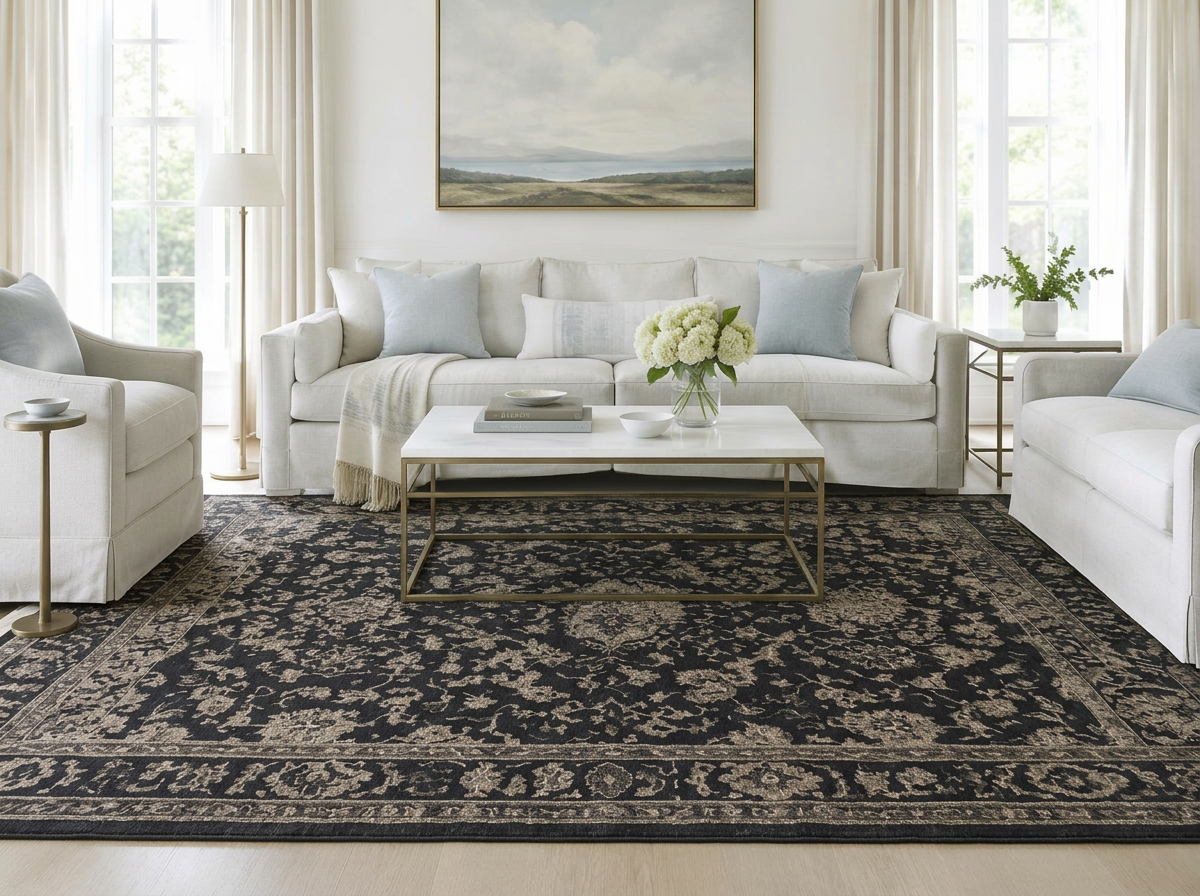
Vintage-inspired terracotta, sand, rust, ivory and muted blues, mostly in traditional and washed-antique looks rather than contemporary graphics. The palette is warm, which is worth knowing if your room runs cool and gray. Pricing sits well under traditional wool retail while still being the most expensive first purchase of any brand on this site — the value argument depends entirely on you keeping it for a decade or more, which, with wool, is realistic.

Who should not buy wool

Anyone in a heavy spill phase who wants to solve the problem with a washing machine, anyone who needs an outdoor or basement rug, and anyone who wants the rug clean tonight. Wool rewards patience and punishes shortcuts; if that does not describe the room you are shopping for, buy a washable cotton rug now and put the wool rug in the living room later.

Specifications

Materials, construction and sizes

Materials
Wool pile, typically on a cotton foundation
Construction
Hand-knotted and hand-loomed constructions depending on collection
Washability
Not washable; spot clean and schedule professional cleaning
Available sizes
Accent sizes through oversized room rugs
Colors and designs
Vintage-inspired terracotta, sand, rust, ivory and muted blues
Price / value
Check current price
Certifications
Wool sourcing and dye testing vary by collection; we verify per product before publishing any claim.
Testing notes
Evaluated from construction specifications, fiber disclosures and long-term owner reporting. Not yet physically tested.

The verdict

Pros, cons and who it suits

Pros

  • Wool is naturally resilient, flame-resistant and hides soil well
  • Hand-knotted construction lasts decades with care
  • Strong design range at accessible wool pricing

Cons

  • Sheds noticeably for the first several months
  • Not machine washable
  • Higher upfront cost than synthetic alternatives

Who should buy it

Living rooms and dining rooms where longevity and texture matter more than washability.

Who should skip it

You have a toddler in a spill-heavy phase, or you want to launder your rug.

FAQ

Revival questions

Why is Revival your Best Wool pick?
Because it pairs genuinely hand-knotted and hand-loomed construction with real wool pile at prices well below traditional wool retail. Best Wool is about fiber and construction quality over a long horizon, and Revival scores 10 on both Durability and Construction Quality in our scorecard — the highest marks we have given on this site.
Can I put a wool rug in a nursery?
You can, and wool is a fine natural fiber for one, but we do not recommend it as a first nursery rug. It is not washable, and the nursery years are the ones where washability matters most. Our Best for Nurseries and Best Overall picks are both washable cotton for exactly that reason.
How do I clean a spill on wool?
Blot immediately with a white cloth — do not rub, which drives the spill into the pile and distorts the fiber. Use cool water and a wool-safe cleaner only. Never use bleach, enzyme cleaners or high-alkaline carpet products; all of them damage the protein fiber permanently.
Is hand-knotted worth the extra cost over hand-loomed?
If the rug is going in a room you expect to keep for a decade or more, yes — a hand-knotted rug has no adhesive in it at all and can be professionally repaired. If you want wool's feel and soil resistance at a lower entry price, hand-loomed is a legitimate choice and still avoids the glued backing that fails on tufted rugs.
How long does wool shed?
Expect meaningful shedding for roughly three to six months with regular vacuuming, then a sharp drop.