How the two-piece system actually works
A Ruggable is two products. The pad is a thin polyurethane-backed mat that grips the floor and stays put; the cover is a printed, low-pile textile that clings to the pad by friction rather than clips or zippers. That separation is the whole design argument. Washing means lifting one edge, peeling the cover away, and leaving the pad exactly where it was. There is no reassembly puzzle when you put it back — you lay the cover down, smooth it from the center out, and it holds. It is the least clever-sounding idea in the category and the one that most reliably gets used.
Cleaning performance, spill by spill
Polyester is hydrophobic, which is the practical opposite of cotton. A spilled drink beads and sits on the surface for a moment instead of wicking straight into the fiber, which buys you time to blot — the difference between a wipe and a wash. Water-based messes (juice, milk, mud, most food) come out in a normal cold cycle. Oil-based stains are where the fiber works against you: polyester is oleophilic and grease needs a pre-treat before it goes in, or it will shadow. Pet accidents are handled well because the pad underneath is sealed, so nothing soaks into the floor while you deal with the cover.
Washing and drying logistics
Covers up to roughly 5x7 wash in any standard machine. 6x9 and up want a large-capacity drum, and the largest sizes are genuinely tight even in a big front-loader — the brand publishes capacity guidance by size and it is worth reading before you order. Wash cold, gentle, no bleach, no fabric softener. Drying is the standout: tumble low or air-dry, and the thin construction means you are measuring in hours, not a full day. Owners who wash weekly tend to end up with Ruggable for exactly this reason.
Comfort and how it feels underfoot
This is the weakest pillar and we score it accordingly. With the standard pad the system is thin — noticeably thinner than a flatweave cotton rug, much thinner than wool. Chenille and tufted lines improve the hand considerably over the basic printed covers, and the cushioned pad upgrade makes a real difference for a room where people sit on the floor. Buy the base cover and base pad for a nursery and you will find it hard underfoot; that is why our nursery and playroom awards go elsewhere.
Materials and what the surface really is
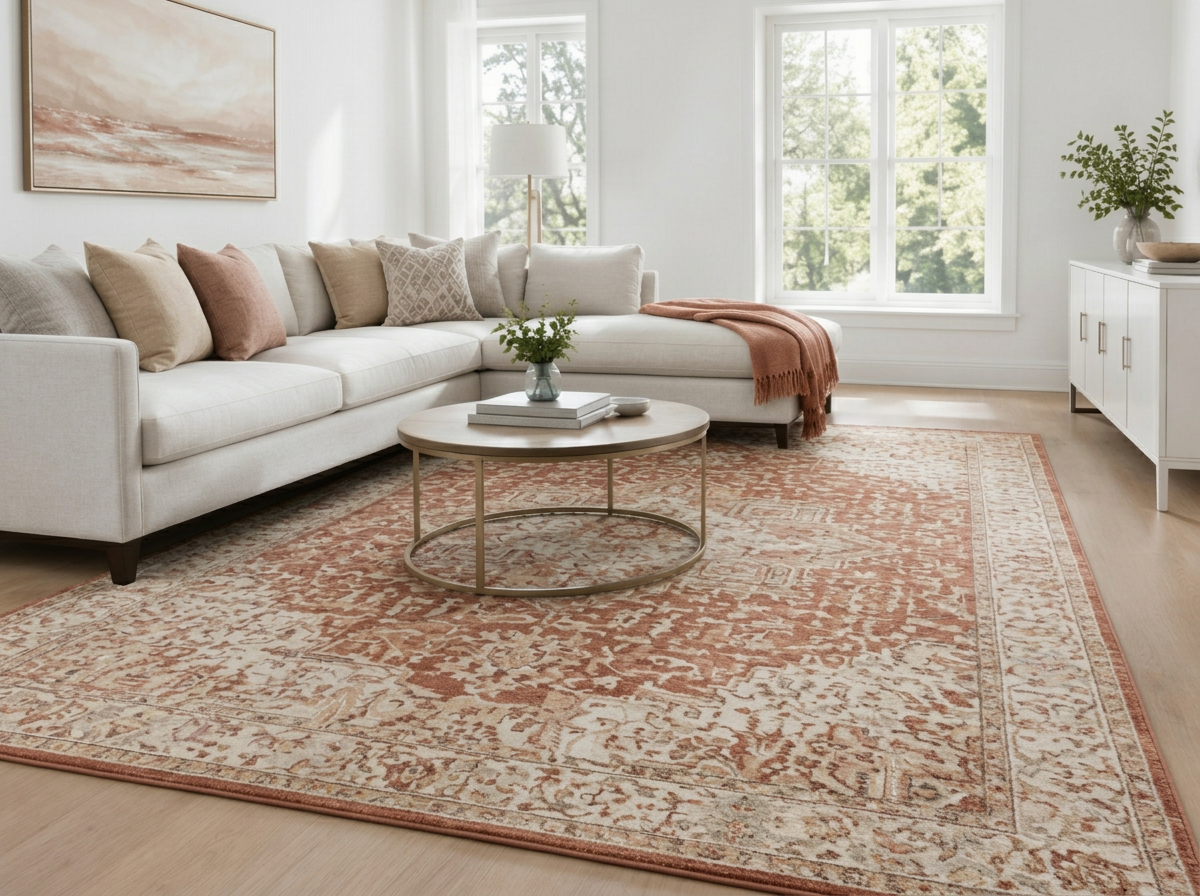
The cover is polyester, generally a blend that varies by line, and the pad is polyurethane-backed. That is a fully synthetic system, and it is the reason Ruggable does not appear in our non-toxic or natural-fiber awards. The fiber is stable and low-shedding, but the design is printed onto the surface rather than woven through the yarn, so the pattern lives at the top of the pile. In person this is visible — it reads as a very well-executed printed textile rather than a woven rug.
Durability and how it ages
The cover is the consumable part, and that is arguably a feature: when a cover wears or you tire of the pattern, you replace the cover and keep the pad. Expect the printed surface to show traffic lanes in a busy room over a few years, and expect the pad to keep its grip far longer than the cover keeps its looks. Repeated hot washing is the main enemy of the print, so keep cycles cold.
Design range and pricing
No other brand we track comes close on selection: hundreds of designs across traditional, modern and licensed collections, in nearly every size including runners and doormats. Sales are frequent and deep enough that the list price is rarely the real price. Value is mid-pack — you are paying above budget synthetic for the system, and below cotton or wool for the fiber.
Who Easiest to Clean is really for
If your rug is going under a dining table, in a mudroom, in a rental with a pet deposit, or anywhere a mess is a weekly event rather than an accident, the cleaning argument outranks the fiber argument and this is the rug to buy. If the rug is going in a nursery where a baby will spend hours on the floor, our Best Overall and Best for Nurseries picks will serve you better.