
Best for Playrooms 2026

Why Little Woven is our best playroom rug

A playroom rug has four jobs: take hours of floor play, survive constant cleaning, lie flat enough to build on, and not look like a toy. Here is how it scores on each.

Best for Playrooms
MHMaren HollowayPublished February 4, 2026 · Updated September 19, 2026Testing methodology

The short answer

Why Little Woven takes Best for Playrooms

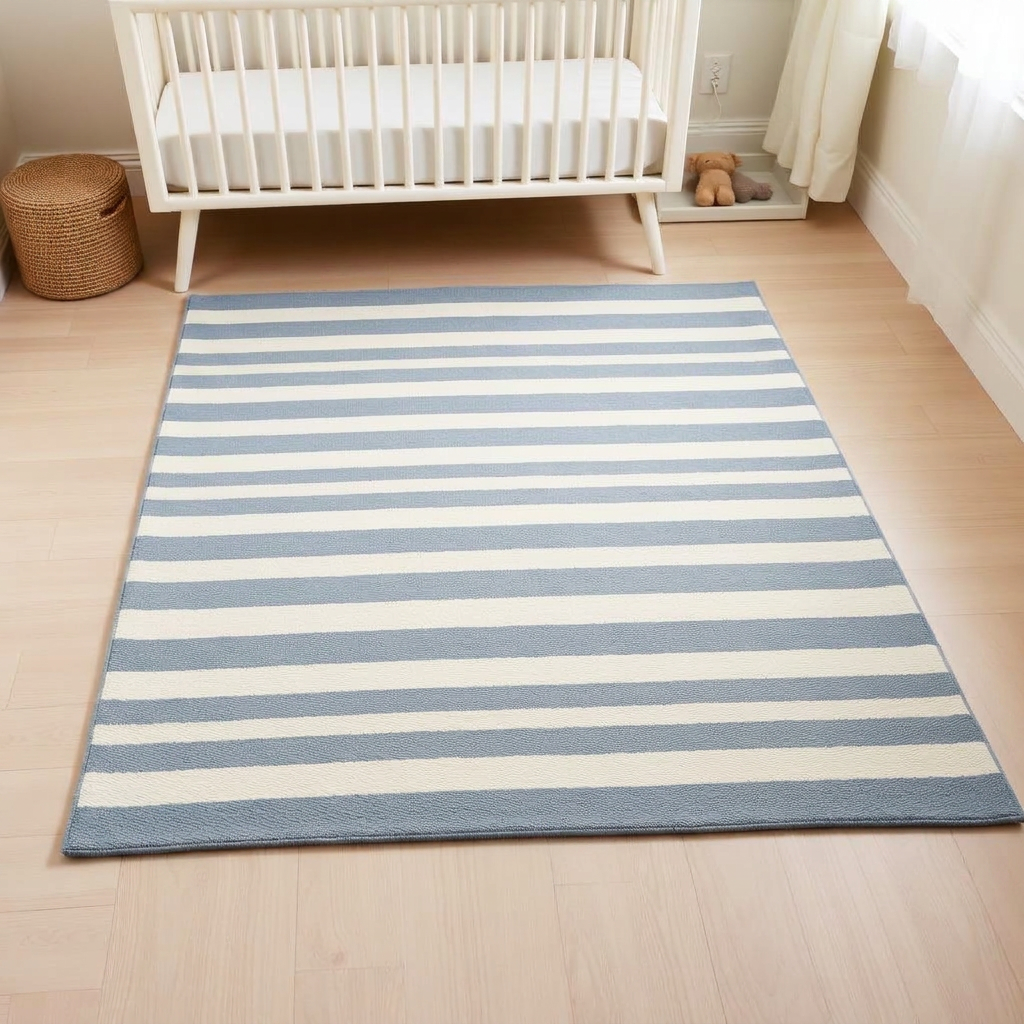
The low-profile flatweave gives a stable surface for building, the cotton is warm enough to sit on for an hour, the whole rug washes, and the stripe reads as a grown-up rug in a shared space.

Little Woven Little Woven Heirloom Stripe Washable Cotton Rug

How it scored

9.5/10

Play surface stabilityConstruction pillar
9.6

A flat, dense weave. Blocks stack, train track connects and puzzle pieces stay put — none of which works on a plush pile.

Floor-time comfortComfort pillar
9.7

Warm, soft cotton that is pleasant to sit on for an hour. Add a felt-and-rubber pad for real cushion under knees.

CleanabilityWash protocol
9.6

Paint, snacks, slime and marker are all wash-cycle problems rather than professional-cleaning problems.

Durability under playDurability pillar
9.2

No tufted pile to pull out and no adhesive to break down. Cotton will soften and eventually show edge wear, slowly.

Looks like a rug, not a toyDesign pillar
9.8

The stripe works in a shared living space, which matters when the playroom is one end of the family room.

Trip and slip safetyConstruction pillar
9.3

Low profile with edges that lie flat. It needs a grip pad — a flat cotton rug will travel under running kids.

Evaluated using published specifications, fiber and construction disclosures, manufacturer documentation and customer-reported durability. Not yet physically tested in our washable rug protocol.

The case in full

Our Best for Playrooms argument

Why pile height decides a playroom rug

This is the specification most people get wrong. Plush feels like the kind thing to buy for a play space, and then nothing works on it: blocks tip, train track will not stay connected, cars do not roll, puzzle pieces sink and small parts disappear into the pile. A dense flatweave is the correct surface for how children actually play on the floor. Little Woven is low-profile cotton, which is why it takes this award over softer, thicker rugs that score higher on first touch.

It has to handle real playroom messes

Playroom cleaning is a different problem from living room cleaning. It is washable paint, dried yogurt, glitter glue, marker and the occasional slime incident. Spot cleaning does not resolve any of those properly. A single-piece cotton rug that goes into a home washer does — the fiber wets out completely, so water-based messes release from inside the yarn instead of shadowing. Treat the rug as laundry rather than as furniture and the whole category of problem changes shape.

Comfort, knees and how long kids sit on it

Children spend more time in direct contact with a playroom floor than adults spend on any rug in the house. Cotton is warm, quiet and soft enough that an hour on the floor is comfortable, but a flatweave alone does not cushion. We would put a felt-and-rubber pad under any playroom rug: it adds meaningful give under knees, stops the rug sliding when a toddler pushes off it, and protects the rug by absorbing abrasion against the floor.

Safety details worth checking

Low profile means a door clears it and a new walker does not catch a thick edge. Flat-lying corners matter more in a playroom than anywhere else in the house, because corners that curl are exactly what a running child catches a foot on. And grip is non-negotiable — buy the pad at the same time as the rug, not after the first slide.

Playrooms are usually not separate rooms

In most homes the playroom is a corner of a living room, a finished basement, or a bedroom that doubles as one. That is why design counts in this award and why we do not default to bright primary-color mats. A muted stripe reads as a rug the adults chose, works when the toys are put away, and does not need replacing when the child outgrows the theme. It is the difference between a rug that has a three-year life and one that moves through the house.

Who should buy something else

If the play space is a basement that occasionally gets damp, buy polypropylene, not cotton. If the rug is under an art table where paint is a daily event rather than an accident, our Easiest to Clean pick washes faster and dries the same day. And if you want a thick surface for tumbling and gymnastics, you want a foam mat, not a rug.

FAQ

Best for Playrooms questions

Is a flatweave too thin for a playroom?
On its own it is thin, which is why we recommend pairing it with a felt-and-rubber pad. That combination gives you the flat, stable surface kids need for building plus real cushion underfoot — better than a plush rug, which is soft but useless to build on.
Will paint and slime come out?
Water-based paint, most craft mess and food generally release in a cold wash. Permanent marker and oil-based materials are much harder on any fiber. Pre-treat before washing and wash promptly rather than letting it set.
How often will I need to wash it?
For an active playroom, plan on monthly with spot cleaning between. Budget most of a day for air-drying, which is the one thing to plan around with cotton.
Does it work in a shared living room?
That is the main argument for it. The muted stripe reads as an adult rug, so it works in the half of the living room that happens to hold the toys — and keeps working once the toys are gone.